
How to drain flat roofs, what to use + calculation
A poorly designed drainage system can significantly shorten the life of the roof cladding and cause huge additional costs. The right solution for flat roof drainage is not complicated – just know the basic principles, know how to calculate the required capacity and choose the right system.
In this guide you will learn how to drain flat roofs including compare gravity and vacuum systems. You will find practical information on how to design the drainage of logistics halls and administrative buildings.
What to drain the roof: basic principles and systems
The life of flat roof cladding depends fundamentally on the method of storm water drainage. The accumulation of water not only leads to damage to the waterproofing, but can also cause structural problems throughout the structure.
Roof drainage can be implemented internally (via outlets to the sewerage system inside the building) or externally (into the through wall outlets with drains along the facade). For industrial buildings, internal drainage is generally used for simplicity, for apartment buildings, acombination of both systems is often chosen.
Roof drainage can be realized internally (through drains and drains into sewers inside the building) or outside (to the under-roof gutters with a duct along the facade). For industrial halls, internal drainage prevails due to simplicity, for apartment buildings, a combination of both systems is often chosen.
The choice depends on the size of the building, climatic conditions and architectural requirements. The key is to follow the basic rules for component placement and dimensioning.
What helps to drain the roof
When draining a flat roof, quality system elements and their proper installation areessential:
Roof outlets represent the heart of the entire system. Industrially manufactured parts with an integrated cuff made of the same material as waterproofing, which can be perfectly welded, are recommended. The minimum diameter is DN 70, but at least DN 100 is recommended to reduce the risk of clogging.
The correct location of the inlets is critical – they must be at the lowest point of the drained area and at least 500 mm from the attics and permeations. The gutter body is always attached to the supporting structure.
Protective leaf guard prevent clogging of the gutter with larger debris (such as leaves, etc.). Special perforated baskets are used for roofs with slate or other special layers.
Heated outlet is an important anti-freeze measure. Self-regulatingsystems at 230 V or low voltage variants with thermostatic control are available.
Safety overflows include emergency drainage in case of blockage of the main drainage system or sewerage accident.
The flowrate through the gutters and safety overflows is calculated separately for each element, according to its respective effective roof area.
Calculation of flat roof drainage
How to dimension well? Proper design of flat roof drainage is the basis of a functional system.
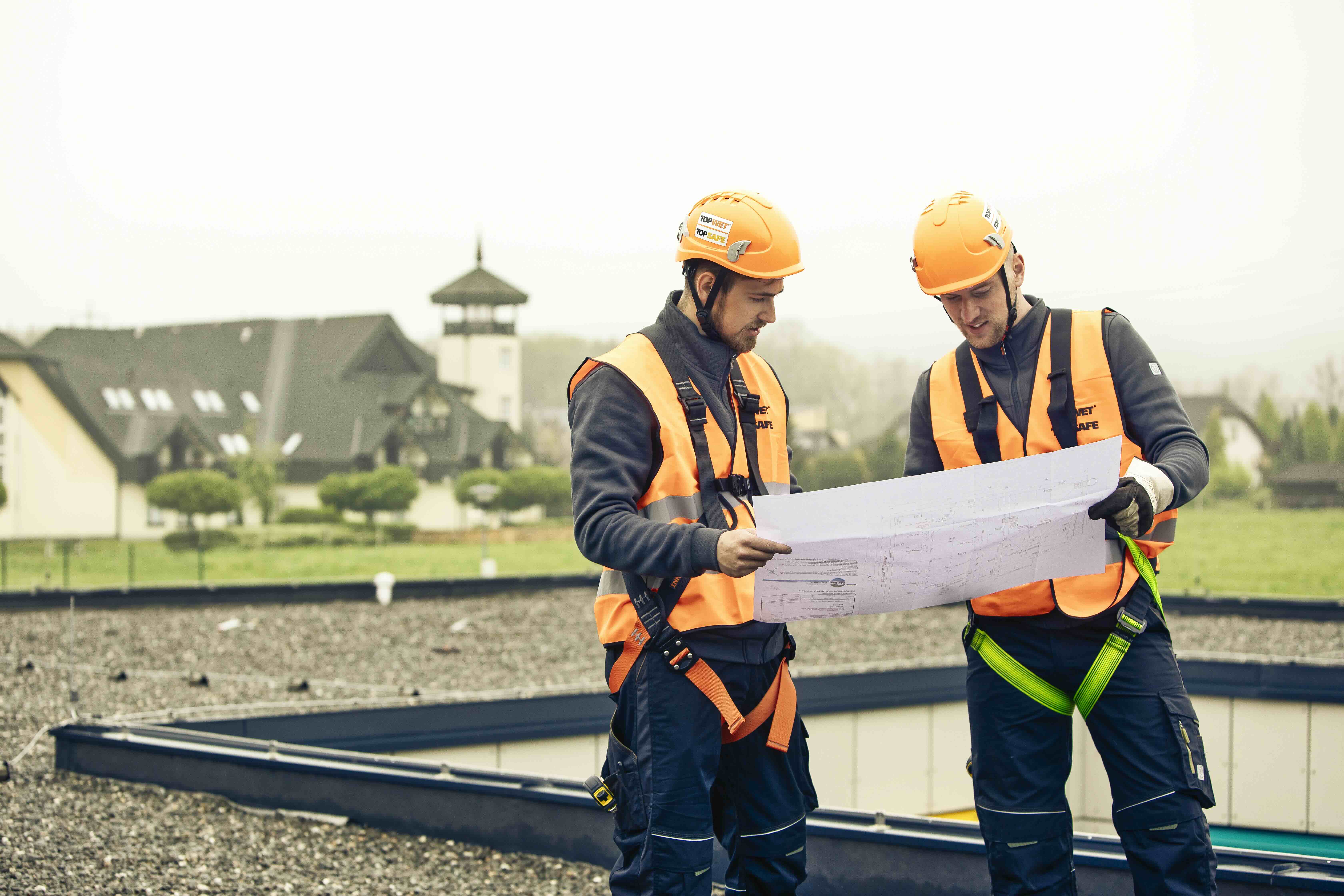
We deal with the design or inspection of suitable TOPWET elements for your projecti ndividually, you need to send us:
- Roof floor plans
- Roof structure compositions
- Construction site locality
- Drainage method (vertical, horizontal)
Gravity vs. Vacuum Roof Drainage
Gravity System: A Proven Solution
The gravity system uses pipe gradient and gravity. It is suitable for smaller buildings up to 1,000 m² and features:
- Ease of design and maintenance
- Availability of components
- Lower initial costs
Vacuum drainage of roofs: Modern solutions for large objects
Vacuum drainage uses the height of the building and the vacuum in the pipes. In the event of intense rain, the pipes fill up and a special inlet prevents air access – creating a siphon effect.
Advantages of vacuum system:
- Smaller pipe size
- Freedom of design
- Self-cleaning
- Space savings
The systemis ideal for logistics halls, shopping centres, sports complexes and industrial buildings over 1,500 m².
Special cases and practical tips
Green roof drainage requires a special approach.
Critical is the use of protective baskets or shafts against clogging.
Emergency drainage – mandatory for new roofs with attics and ensures the drainage of excess water when the main drainage system is blocked or sewerage accidents occur.
Common errors:
- Underestimation of rainfall intensity
- Misplacement of outlets
- Neglect to use emergency drainage
- Insufficient maintenance (inspection and revision at least twice a year)
Quality drainage as an investment in the future
Properly designed flat roof drainage is a key factor for the long-term functionality of the roof envelope. Whether you choose a gravity or vacuum solution, it is important to follow the basic principles: correct calculation, quality components and expert assembly.
Savings on drainage can backfire with several times the cost of repairing damage. Investing in a quality system with redundancy always pays off.
Need help choosing a system? TOPWET experts will help you design a tailor-made drainage system for your project. Contact us for a free consultation and find out how to design a functional and efficient drainage system.